
Water Damage Restoration

Pipes, Floods, and Leaks
Water Damage Restoration With Documentation Your Adjuster Can Use
Water spreads fast, soaking into drywall, insulation, and subfloors long after the surface looks dry. Our water damage restoration team starts by finding out where the water came from, since a clean supply line and outside floodwater need very different handling. Then we extract, dry, and document each step with photos and moisture readings so your claim has the proof it needs.
Call Now for Emergency Water Damage Restoration
Standing water and wet materials give mold a head start in as little as a day or two. Crews answer 24/7 to start water extraction services, stop the spread, and protect what hasn’t been damaged yet.
Act Fast
Why Water Damage Cleanup Can’t Wait
Water doesn’t stay where it lands. Within hours, it wicks up drywall, soaks into carpet pad, and settles into wall cavities you can’t see. Wood floors start to cup, and finished basements can lose drywall and trim that were fine the day before.
Waiting also makes the job bigger. Mold can begin growing within 24 to 48 hours under the right conditions, and every extra day adds demolition and drying time to the bill. Insurance carriers expect quick action to limit further damage.
Prompt water damage cleanup and flood damage restoration keep the affected area smaller. Fast extraction, targeted demolition, and professional drying mean fewer materials to replace and a shorter path back into your home.
Testimonials
What Your Neighbors Are Saying
Signs of Hidden Water Damage
Not every water problem announces itself with a burst pipe. In Madison, ice dams, spring snowmelt, and slow leaks behind walls can cause damage for weeks before anyone notices. Watch for these warning signs:
- Musty odors: A damp smell in a basement or closet often points to moisture you can’t see.
- Stains or discoloration: Yellow or brown marks on ceilings and walls suggest a leak above.
- Soft or warped flooring: Cupped hardwood, lifting vinyl, or spongy subfloors mean water has worked its way underneath.
- Peeling paint or bubbling drywall: Trapped moisture pushes finishes away from the wall.
- Sagging ceilings: Water pooling above drywall can make a ceiling bow or drip near light fixtures.
- Higher water bills: An unexplained jump can signal a hidden plumbing leak.
- Visible mold: Spots along baseboards or in corners usually mean the moisture has been there a while.
Catching these early keeps a small repair from turning into a full tear-out.
Start to Finish
What Sets Our Water Damage Services Apart
Every water damage restoration call starts with questions. Is the water coming from inside, like a supply line or water heater, or from outside, like rain or flooding? Is it clean, or could it be contaminated?
Those answers shape the equipment and scope before anyone walks through your door. On-site, the Ellipsis Restoration crew begins water extraction services and stabilizes the area right away. A follow-up inspection maps out which materials need to come out and which can be dried in place.
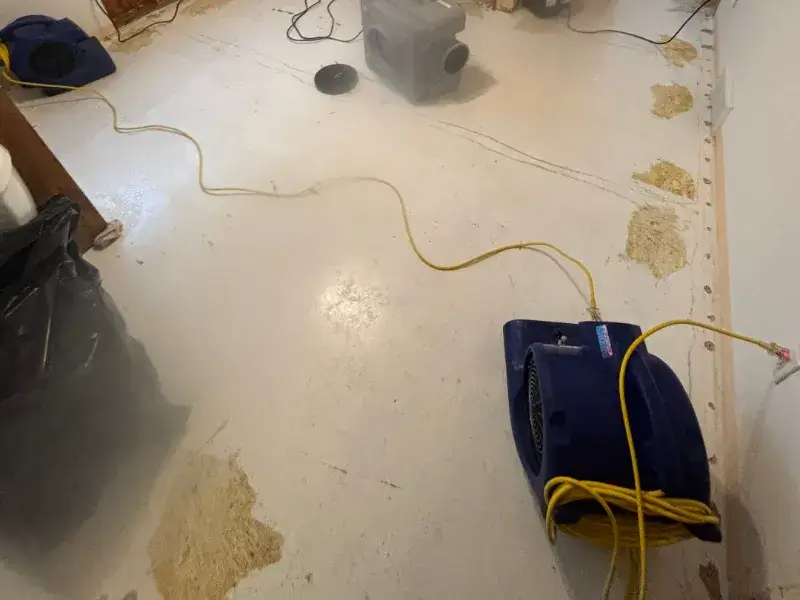
Air movers and dehumidifiers handle the drying, while moisture readings and humidity levels get recorded throughout. Photos, readings, and drying logs give your adjuster a clear record of the loss and the work performed.
Hidden damage is common with water. Opening one wall often reveals wet insulation or framing further along. When that happens, you’ll get an explanation and a revised cost before any extra work moves forward.
Your belongings get protected during demolition, and drywall dust gets cleaned up before the crew leaves. After outside flooding, flood damage restoration includes removing contaminated materials and cleaning the space before drying starts. Once everything is dry, the same team rebuilds with new drywall, paint, and flooring, so you’re not hiring a second contractor.
Frequently Asked Questions
How long does the drying process take?
Drying usually takes three to five days, depending on how much water soaked in and what materials are involved. Moisture readings track progress, so drying ends when the numbers confirm it, not on a guess. Repairs follow after drying wraps up.
Do you handle flood damage restoration after heavy rain?
Yes. Summer thunderstorms around Madison can overwhelm storm drains, especially near Lake Mendota and Lake Monona, where high lake levels slow drainage. Outside floodwater is treated as contaminated, so affected materials are removed and cleaned before drying.
What should I do while I wait for water extraction services?
If it’s safe, shut off the water supply and turn off power to wet areas. Move valuables and furniture to a dry spot, and take photos of the damage for your insurance company.
Will my insurance cover water damage cleanup?
Coverage depends on your policy and the source of the water. Sudden events like a burst pipe are often covered, while long-term leaks and outside flooding may not be. Ellipsis Restoration provides the photos and moisture logs your adjuster needs to review the claim.
Can frozen pipes really cause this much damage?
They can. When Dane County temperatures drop below zero, pipes in exterior walls, garages, and crawl spaces can split. A cracked line may run for hours before anyone notices, which is why emergency water damage restoration is available 24/7.
Do I need to replace all my drywall and flooring?
Not always. Clean water caught early can often be dried without removal. Materials soaked by contaminated water or left wet too long usually get replaced, and you’ll see which is which before demolition starts.