
Moisture Assessment Services
Know It’s Dry
Moisture Assessment Services That Measure Instead of Guess
Drywall can feel dry to the touch while the framing behind it still holds water. Rebuild too soon, and that trapped moisture can lead to warped flooring, peeling paint, and mold inside finished walls.
Our moisture assessment services measure what’s really happening in your walls, floors, and ceilings, so decisions about drying and repairs rest on readings, not assumptions.
Schedule a Moisture Inspection Before You Rebuild
Closing up walls over damp materials can undo an entire repair. A moisture check confirms what’s dry, what still needs drying, and what has to be replaced before new drywall goes up.
Protecting Your Property
Why Hidden Moisture Causes Long-Term Damage
Water travels farther than it looks. It wicks up drywall, spreads under flooring, and soaks into wood framing and subfloors, often well beyond the visible stain.
Moisture left behind keeps causing damage after the original leak is fixed. Wood can swell and warp, adhesives under flooring can fail, and damp insulation loses much of its effectiveness. Mold can begin growing within 24 to 48 hours under the right conditions.
A structural moisture assessment finds those problem areas before they turn into repeat repairs. It also gives you a documented baseline, which helps if your insurance adjuster questions how far the water spread.
Testimonials
What Your Neighbors Are Saying
When a Moisture Check Makes Sense
Some situations call for a closer look at moisture levels, even if everything appears dry:
- After water damage:
– A burst pipe, appliance leak, or sewage backup
– Basement seepage after spring snowmelt or heavy rain - Before repairs or rebuilding: A structural moisture assessment confirms framing and subfloors are dry before new drywall or flooring goes in.
- When something seems off:
– Musty odors with no visible source
– Peeling paint, bubbling drywall, or warped trim
– Condensation on windows or basement walls - After an ice dam: Meltwater can soak attic insulation and ceiling drywall without obvious signs below.
- Before buying or selling: A water damage moisture inspection can reveal past problems in an older home.
- For insurance claims: Readings document the extent of the damage and the progress of drying.
Moisture detection services remove the guesswork in each of these situations. You’ll know where the problem areas are and what to do about them next.
Readings You Can Use
What a Moisture Assessment Covers
Our moisture assessment services start with a conversation. The crew asks about recent leaks, flooding, odors, and repairs, then walks the entire property to see where water may have traveled.
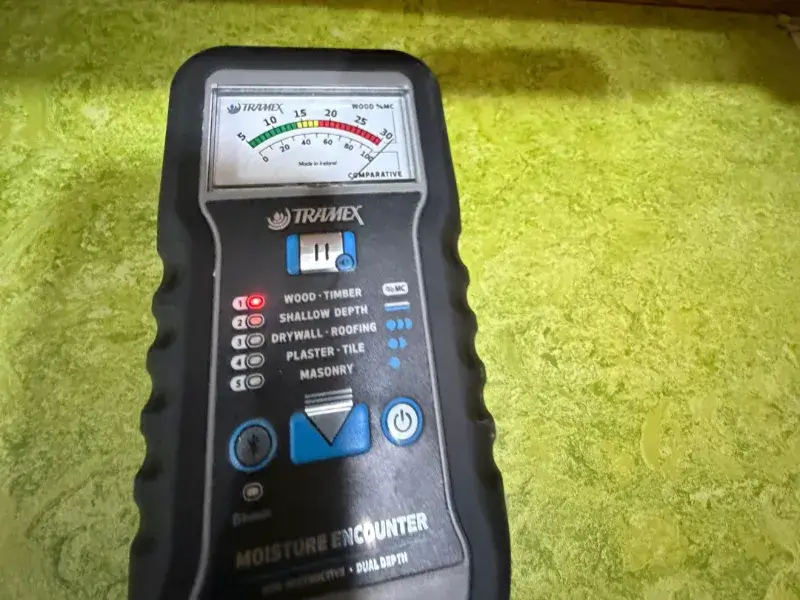
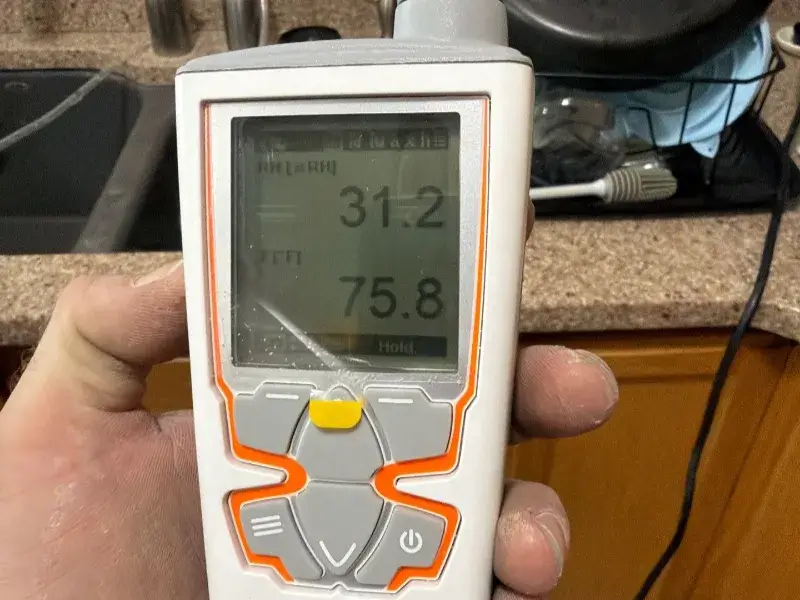
Readings come next. Walls, floors, ceilings, and framing are checked across the affected area and beyond it, since water often spreads farther than expected. Humidity levels get recorded too, especially in basements and enclosed spaces where damp air lingers.
Those numbers become a map of what’s wet and what’s dry. Ellipsis Restoration explains the results in plain language and recommends a next step, whether that’s targeted drying, removing saturated materials, or simply keeping an eye on a small area over time.
During active drying, readings get taken again and again to track progress. Drying stops when the numbers say it’s done, not when a set number of days passes. That record of readings, photos, and humidity levels also supports your insurance claim.
Dane County weather makes this work especially important. Spring snowmelt saturates soil around foundations, humid summers keep basements damp, and winter ice dams soak attic insulation. Older homes near Lake Mendota and Lake Monona, along with newer subdivisions with grading issues, benefit from moisture detection services that show where water collects.
Frequently Asked Questions
What’s the difference between a moisture inspection and a mold inspection?
A moisture inspection looks for water in building materials, while a mold inspection looks for growth. Since mold needs moisture, finding damp areas early can help you stop a problem before it starts.
When do I need a water damage moisture inspection?
Any time water has soaked into walls, floors, or ceilings. A moisture inspection shows how far it spread and whether drying is complete before repairs begin.
How long do moisture detection services take?
Most visits take an hour or two, depending on the size of the affected area. Active drying jobs include repeat readings over several days.
What is a structural moisture assessment?
It focuses on framing, subfloors, sheathing, and other structural materials. These parts of a home hold water longer than drywall and can rot or warp if they stay wet.
Will my insurance pay for moisture assessment services?
It depends on your policy and the cause of the damage. When the assessment is part of a covered water loss, Ellipsis Restoration provides readings and photos your adjuster can review.
Why does my basement feel damp even without a leak?
High summer humidity, groundwater, and seepage after snowmelt are common in Madison basements. A moisture check helps pinpoint whether the source is the air, the foundation, or a hidden leak.