
Mold Remediation
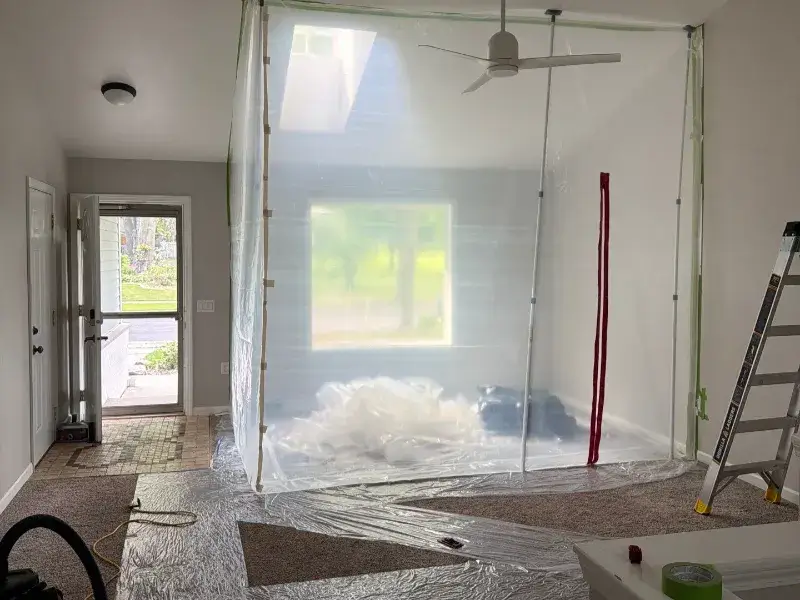
Contain and Clean
Mold Remediation Under Negative Pressure Containment
Mold rarely stays in one spot. Disturb it the wrong way, and spores can travel through your home on the air.
Our mold remediation work seals off the affected space, runs HEPA air scrubbers under negative pressure, and removes damaged materials one section at a time. Post-remediation testing then checks the results before anyone calls the job finished.
Get Mold Cleanup Services Before It Spreads
Mold grows as long as moisture feeds it. A free on-site assessment shows you the extent of the growth, the moisture source behind it, and a clear plan with costs before work begins.
Understanding the Risks
Why DIY Mold Removal Often Backfires
Spraying bleach on visible growth might lighten the color, but it doesn’t address mold rooted in porous materials like drywall, insulation, and wood. Scrubbing or tearing out moldy materials without containment can also send spores into other rooms.
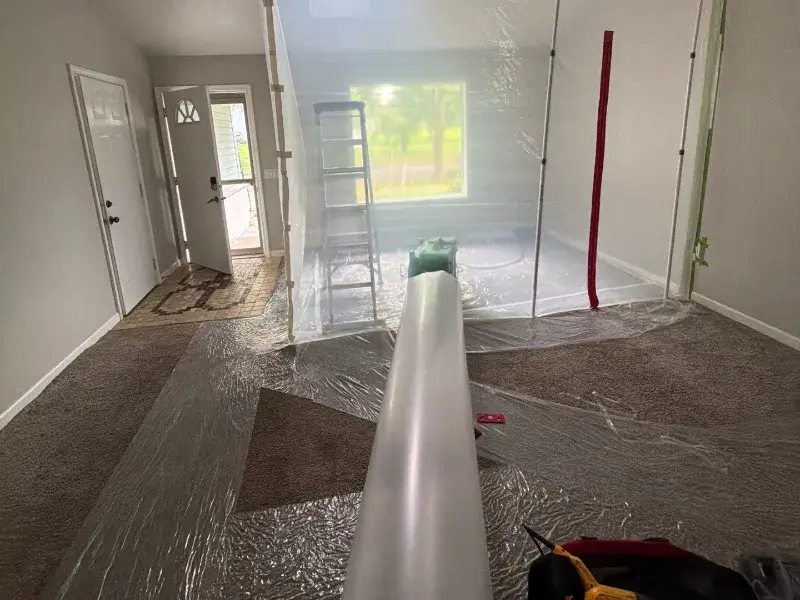
Professional mold removal services do more than clean a surface. Containment barriers isolate the work area, negative air pressure keeps contaminated air from escaping, and HEPA filtration captures airborne spores during the work. Affected materials come out in sealed bags.
Whether it’s a single closet or basement mold remediation, the plan has to address the moisture that started the problem. Without fixing the leak, humidity, or drainage issue, mold has every reason to return.
Testimonials
What Your Neighbors Are Saying
Our Mold Remediation Process
Mold removal services follow a clear sequence, and you’ll know what’s happening at each stage:
- Assessment: The crew identifies visible growth, checks moisture levels, and finds the source feeding the mold.
- Containment: Plastic sheeting closes off affected rooms, and negative pressure keeps spores from drifting elsewhere in the house.
- Air filtration: HEPA air scrubbers run throughout the project to capture airborne particles.
- Material removal: Drywall, insulation, carpet, or other porous materials with growth are cut out and bagged.
- Cleaning: Remaining surfaces such as framing and subfloors are cleaned and treated.
- Drying: Moisture levels are returned to acceptable ranges so growth has less to feed on.
- Post-remediation testing: Testing evaluates the work before containment comes down.
– If testing passes, the area is ready for repairs.
– If it fails, the crew re-cleans and pays for another round of testing.
Once the area clears, the same team can rebuild what was removed, from drywall to flooring.
Specialty Work
Handling Black Mold Removal the Right Way
Mold cleanup services are the team’s main specialty, and it shows in the details. Containment goes up before anything is disturbed, belongings get protected or moved, and drywall dust gets cleaned before the crew leaves each day.
Many calls start with a request for black mold removal. Dark growth can look alarming, but color doesn’t change the approach. Every job gets the same containment, filtration, and careful removal, whether the growth is black, green, or white.
Basement mold remediation is one of the most common jobs in Dane County. Spring snowmelt and heavy summer storms push water toward foundations, and humid Wisconsin summers keep finished basements damp long after a leak is fixed. Older homes in Madison neighborhoods like Marquette and Tenney-Lapham often need extra attention around foundation walls and aging plumbing.
Cost is another common concern. Many insurance policies limit mold coverage, so Ellipsis Restoration explains up front what may fall outside your policy. If hidden growth turns up once walls are opened, you’ll hear about it and approve any added work before it starts.
The job isn’t finished until post-remediation testing passes. If a test fails, the crew comes back, covers the next test, and re-cleans at no additional charge, so you’re never left paying to finish someone else’s work.
Frequently Asked Questions
How long does mold remediation take?
Most residential projects take a few days, depending on how much material has to come out and how long drying takes. Larger jobs or growth spread across several rooms can take longer.
Do you offer black mold removal?
Yes. Dark-colored growth is handled with the same containment and HEPA filtration as any other mold, since color alone doesn’t change the process.
Will insurance pay for mold cleanup services?
It depends on your policy and what caused the mold. Growth from a sudden event like a burst pipe may be covered, while mold from long-term leaks or humidity often isn’t. Ellipsis Restoration will walk you through possible out-of-pocket costs before the project starts.
Why does mold keep coming back in my basement?
Usually because the moisture source hasn’t been fixed. Seepage during spring snowmelt, poor grading, or high summer humidity can keep feeding growth, so basement mold remediation always includes finding that source.
Can I stay home during mold removal services?
In many cases, yes. Containment and negative pressure keep the work area separate from the rest of your home. For larger projects, the crew will talk through whether a short stay elsewhere makes sense.
What if mold turns up during another repair?
It happens often, especially after water damage opens up a wall. Work pauses, you get an explanation and a revised cost, and nothing moves forward without your approval.